Dry Aged Steaks
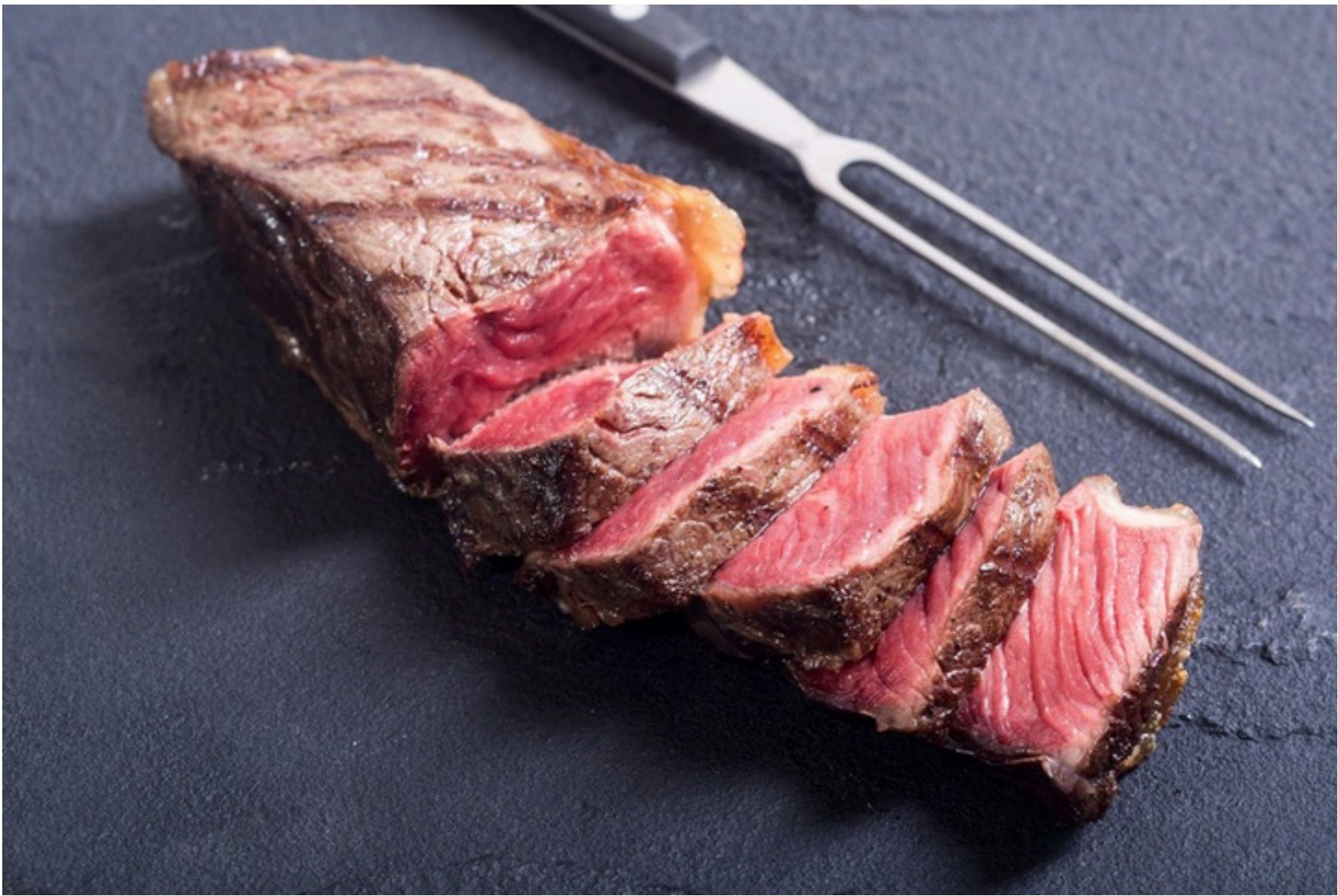
New York Strip
The steakhouse middle ground: tender, beefy, predictable.
- Balanced steakhouse
What makes it unique
Best-of-both-worlds balance
The sweet spot between filet and ribeye.
Simpler cook-through
Predictable thickness and fat cap for easy searing.
Portion efficiency
Boneless 10 to 14 oz with minimal waste.
Presentation value
Classic steakhouse look.
Lean-to-protein ratio
Slightly leaner than ribeye but still flavorful.
Versatility
Great with simple seasoning or compound butters.
Price point
Usually below ribeye and porterhouse.
Why someone chooses New York Strip
Cut location
What it means
Comes from the short loin (longissimus dorsi) just behind the ribeye, usually boneless.
Why it matters
That muscle does little work, so it stays naturally tender while still developing flavor.
Marbling profile
What it means
Moderate intramuscular fat, more than a filet, less than a ribeye.
Why it matters
You get a satisfying beefy taste without excessive rendered fat pooling on the plate.
Firm yet tender texture
What it means
Tighter grain and a slight chew compared with filet mignon.
Why it matters
Offers a steakhouse bite that many diners find more substantial and satisfying.
Fat cap on one edge
What it means
Thin strip of exterior fat left on purpose.
Why it matters
Bastes the meat during cooking, adding richness and keeping it juicy.
Consistent thickness
What it means
Typically cut 1 to 1.25 inches thick from a uniform muscle.
Why it matters
Makes it easier to nail that ideal medium-rare across the whole steak.
Flavor intensity
What it means
Bold, beef-forward taste, sometimes called clean and lightly buttery.
Why it matters
Provides depth without the extra gaminess you might find in cuts like hanger or skirt.
Ready to cook New York Strip?
Order pasture-raised, dry-aged new york strip direct from our farm.
Buy New York Strip at Blackwater Pastures